Extension Hill tailings in concrete
Francis Atta Kuranchie and colleagues
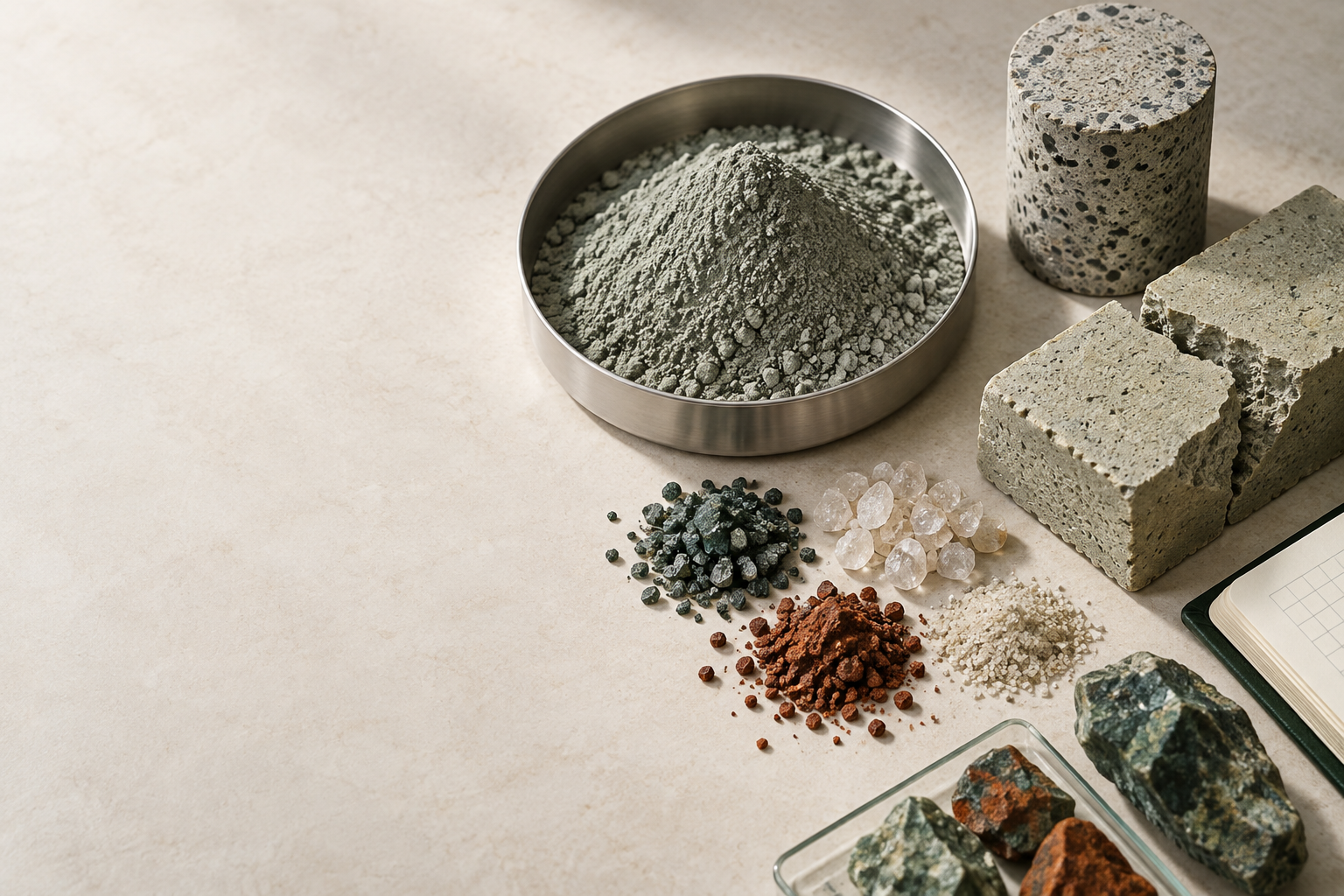
Laboratory concrete used tailings as both fine and coarse aggregates, with conventional concrete as the control.
Read the summary →Evidence-led tailings reuse
An Australian engineering-led knowledge hub for tailings reuse, mine-waste valorisation and circular infrastructure.
Explore what researchers have tested, what they found and the conditions behind their results. Follow each summary to the authors’ original publication.
Why this exists
Waste2Resource brings together studies on tailings reuse and recovery. The summaries keep findings alongside the authors’ test conditions, assumptions and limitations, so you can read the result in context.
Waste2Resource began with a simple question: could tailings become a useful resource? Read the story →
Explore the platform
Explore laboratory studies on construction materials, backfill, dewatering, carbonation and metal recovery.
Explore cases →02 / METHODSee how summaries retain source references, test conditions and the authors’ stated limitations.
Read the methodology →03 / EVIDENCERead reviews and a research report covering the wider evidence on tailings reuse.
Read the evidence →Inside the library
Francis Atta Kuranchie and colleagues
Laboratory concrete used tailings as both fine and coarse aggregates, with conventional concrete as the control.
Read the summary →Caleb M. Woodall and colleagues
Stillwater tailings were characterised and tested for carbon mineralisation under ambient temperature and pressure with enriched carbon dioxide.
Read the summary →An open engineering inquiry
Waste2Resource is being developed as a place to compare evidence, test assumptions and connect people working on mine-waste reuse. If you are investigating a similar problem, I’d be interested to compare notes.
Collaborate or start a conversation